
If you sell components, automation systems, or manufacturing technology, you already know these two shows are on a different scale than most industry events. Hannover Messe alone draws over 4,000 exhibiting companies and more than 100,000 trade professionals. FABTECH regularly pulls in tens of thousands of visitors and roughly 1,000 exhibitors. Standing out in that environment isn't about having the biggest booth on the floor, it's about having a space that's sized correctly for what you actually need to show and who you need to talk to.
For a large share of industrial exhibitors, component suppliers, mid-sized equipment manufacturers, automation and controls specialists, a 10x20 booth hits that balance. Here's the reasoning, based on what actually happens on these show floors.
Why 10x20 Fits the Industrial Exhibitor Profile
Industrial trade shows are different from consumer or tech events in a specific way: buyers usually arrive with a clear technical need already in mind. They're not browsing for inspiration, they're comparing suppliers, checking specs, and deciding who to bring into a procurement conversation. That changes what a booth actually needs to do.
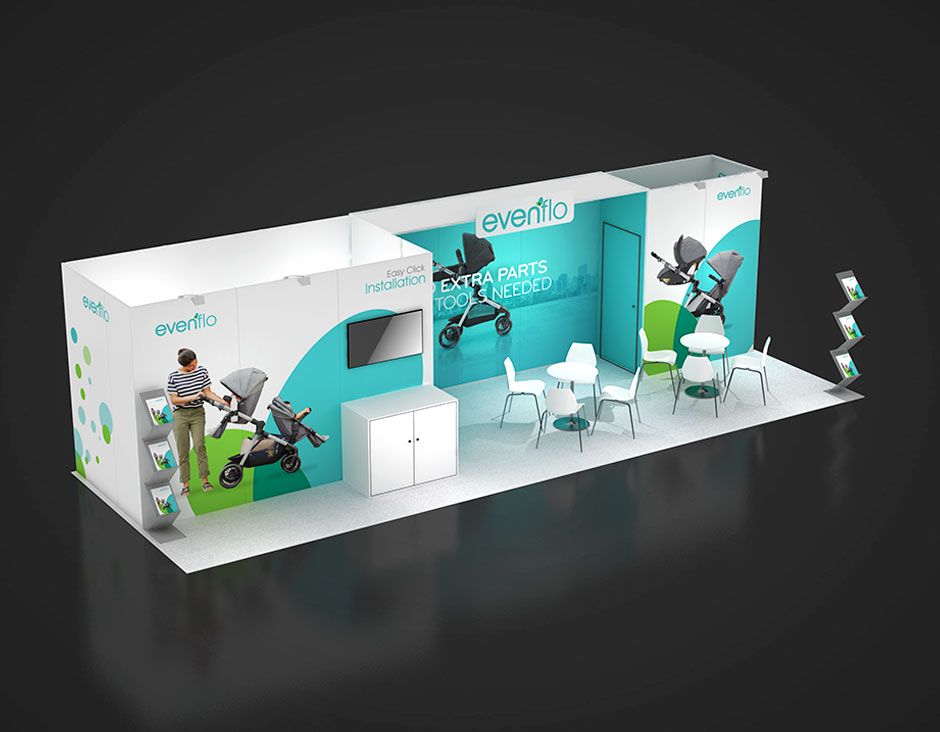
A 10x20 trade show booth gives most industrial exhibitors enough room to:
- Display one or two pieces of equipment or a functional demo unit, without overcrowding the space
- Set up a small standing-meeting area for the technical conversations that actually drive B2B decisions
- Include enough signage and literature space to explain specifications clearly, without needing a full product wall
For exhibitors whose core selling point is a technical capability rather than a visual spectacle, this size is usually enough to make the case, without paying for square footage that would go unused.
What Makes a 10x20 Booth Design Work for This Audience
Industrial buyers respond to clarity, not spectacle. A well-planned 10x20 booth design for a show like Hannover Messe or FABTECH tends to share a few traits:
Equipment gets the space it needs. If you're showing a machine, a robotic arm, or a working demo unit, that display needs real breathing room, buyers want to see it operate, not squint at it from behind a crowd.
Technical conversations get a dedicated spot. A small standing counter or a simple meeting corner gives your team a place to walk a buyer through specs or discuss an application-specific question, separate from the open display area.
Signage does real work.Industrial buyers are scanning for capability, not brand storytelling. Clear, specific signage, what the product does, what problem it solves, key specs, tends to outperform generic branding graphics at these shows.
Storage is planned in, not improvised. Literature, spare parts, cables, laptops, industrial booths accumulate practical clutter fast. A design that includes discreet storage keeps the display area looking sharp for all four days, not just the first one.
Trade Show Displays at This Size: Rental vs. Owning
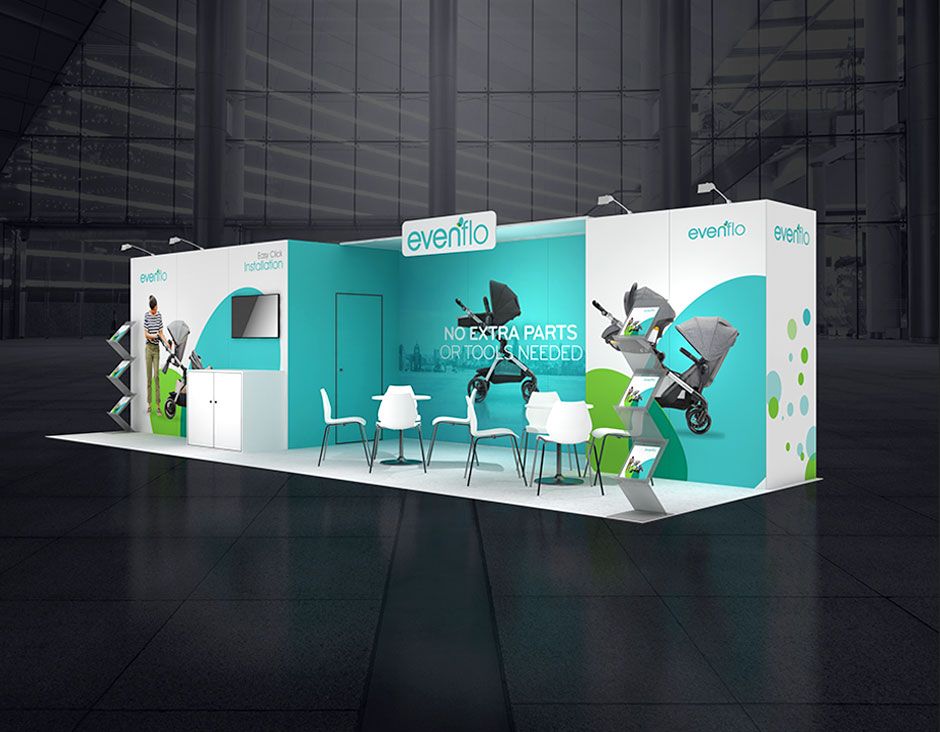
Many industrial exhibitors, especially those attending both Hannover Messe and FABTECH in the same year, alongside regional shows, lean toward a 10x20 trade show booth rental rather than purchasing a structure outright. A few practical reasons this comes up so often in this sector:
- Shipping across continents is expensive. Hannover Messe is in Germany; FABTECH alternates between US cities. A rental model avoids the cost and complexity of shipping an owned structure across the Atlantic for one show and back for another.
- Specs and demos change between shows. Industrial exhibitors often adjust which equipment or demo they're showing depending on the event's audience. A rented structure is easier to reconfigure around a different centerpiece each time.
- It reduces the burden of storage and maintenance. An owned structure needs somewhere to live between shows and someone responsible for its upkeep. Renting removes that overhead entirely.
That said, exhibitors attending the same regional show repeatedly, year after year, sometimes find that a 10x20 modular trade show booth they own and reconfigure makes more financial sense over a multi-year horizon. The right choice really depends on how many shows you're doing, how far apart they are, and how much your display needs change from one to the next.
A Few Things Worth Planning Ahead of Time
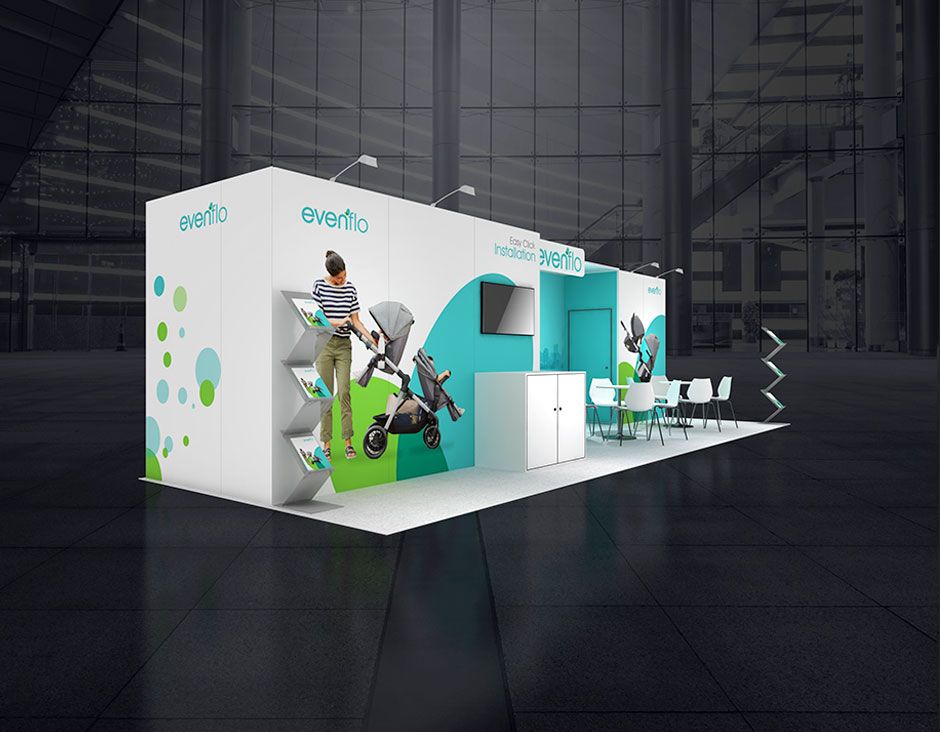
If you're exhibiting at Hannover Messe or FABTECH in a 10 x 20 footprint, a few details are worth locking down early rather than leaving for the week of the show:
- Power and rigging requirements: especially if you're running powered equipment or a live demo, confirm these against the venue's technical manual well in advance
- Freight deadlines: which tend to be strict at large industrial shows and don't leave much room for late changes
- Booth orientation: since a corner or end-cap position on a 10x20 footprint often gives meaningfully better visibility than an inline spot, if your show package allows a choice
Getting the Size Right
Not every industrial exhibitor needs 10x20, and not every 10x20 needs to look the same. But for a company that needs to show real equipment, host genuine technical conversations, and do it across more than one major show a year, this size consistently shows up as the practical middle ground, enough room to make your case clearly, without carrying the cost and logistics of a much larger structure.