

For B2B companies, a trade show isn't just about foot traffic and brand impressions it's about closing deals, building strategic relationships, and demonstrating the scale of your business to the people who sign the contracts. When your event strategy is built around high-value meetings rather than volume, a standard single-level booth often can't deliver what you actually need.
This is where double decker exhibition stands come in. For decision-makers evaluating whether the investment is justified, here's a clear breakdown of the business case.
The Problem With Standard Booths for High-Value B2B Engagement
Most single-level booths are designed for one purpose: attracting maximum foot traffic. But high-value B2B meetings require something different entirely.
· Confidential conversations need privacy, not open floor exposure
· Decision-makers expect a setting that reflects the scale and credibility of your business
· Multiple parallel meetings often need to happen simultaneously without disrupting each other
A double decker trade show booth directly solves these structural limitations by adding vertical space effectively doubling your usable footprint without doubling your floor allocation.
1. Private Space for Serious Conversations
High-value deals rarely get discussed in the middle of a busy aisle. Decision-makers need an environment where sensitive discussions, pricing conversations, and partnership negotiations can happen without distraction.
With a well-planned double decker exhibition stand, you can:
· Reserve the upper level exclusively for private meetings or VIP clients
· Keep the ground floor open for general visitor engagement and lead capture
. Separate your sales funnel physically casual interest downstairs, serious business upstairs
This separation alone often justifies the investment for companies focused on enterprise or high-ticket sales cycles.
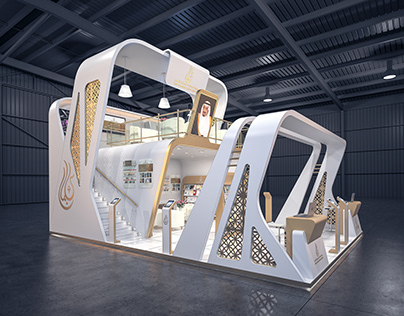
2. A Visual Statement of Scale and Credibility
Perception matters in B2B. When a prospective client or partner walks the show floor and sees your double decker exhibition stands towering above the competition, it sends an immediate, non-verbal message: this is a company with resources, ambition, and staying power.
For decision-makers evaluating vendors or partners, that first impression can influence:
· Perceived financial stability
. Confidence in long-term partnership viability
. Willingness to engage in deeper conversation rather than a quick brochure exchange
In competitive industries, standing physically above the crowd often translates into standing above the crowd in a prospect's mind as well.
3. Maximizing Limited Floor Space
Exhibition floor space is expensive, and larger footprints aren't always available or practical. This is one of the strongest financial arguments in favor of a double decker exhibition stand design.
· You get double the usable space without paying for double the floor allocation
. Ground-floor square footage costs are effectively offset by the added upper level
. Over multiple events, the cost-per-square-meter often works out favorably compared to renting larger single-level space
For decision-makers focused on maximizing ROI per square meter, this is often the deciding factor.
4. Supporting Multiple Business Functions Simultaneously
A single-level booth forces all activity into one shared space. A two-level structure allows you to run multiple functions in parallel without one disrupting the other.
Common configurations include:
· Ground floor: product displays, demos, and general visitor engagement
. Upper floor: executive meeting rooms, client hospitality areas, or press briefings
. Combined: networking events or product launches with tiered audience experiences
This flexibility is particularly valuable when your team includes both marketing staff attracting visitors and sales executives closing deals each group can operate effectively without stepping on each other's workflow.
5. A Long-Term Asset, Not a One-Time Expense
Decision-makers evaluating this investment should consider it in the context of long-term value rather than a single event cost.
Working with experienced double decker exhibition stand builders allows you to:
· Design a structure that can be reconfigured or rebranded for future events
. Reuse structural components across multiple shows, reducing cost-per-event over time
. Scale the design as your company grows into larger exhibition spaces
When treated as a reusable asset rather than a disposable expense, the total cost of ownership becomes far more favorable than it initially appears.
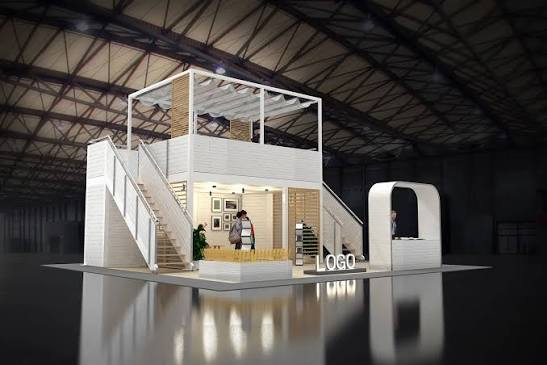
6. What Decision-Makers Should Evaluate Before Investing
Before committing budget to a double-level structure, key stakeholders should assess:
· Venue restrictions height limits and structural approval requirements vary by venue
. Expected meeting volume is there genuinely enough high-value activity to justify a dedicated upper level?
. Builder experience not all exhibition stand companies are equipped to handle multi-level structural engineering and safety compliance
. Reusability plan how many events will this structure realistically be used for?
Partnering with experienced double decker exhibition stand builders early in the planning process helps avoid costly redesigns, compliance issues, or structural miscalculations later.
Final Thoughts
For companies whose trade show strategy centers on high-value B2B relationships rather than mass foot traffic, a double decker exhibition stand isn't a luxury it's a strategic tool. It creates the privacy needed for serious conversations, projects the scale and credibility that decision-makers respond to, and maximizes the value of every square meter of floor space.
When approached as a long-term business asset and built with the right double decker exhibition stand design and experienced construction partner, the investment consistently pays for itself in stronger relationships, higher-quality leads, and deals that might never have happened on a standard show floor.